How to Prevent Mold After Water Damage in Your Watauga Home
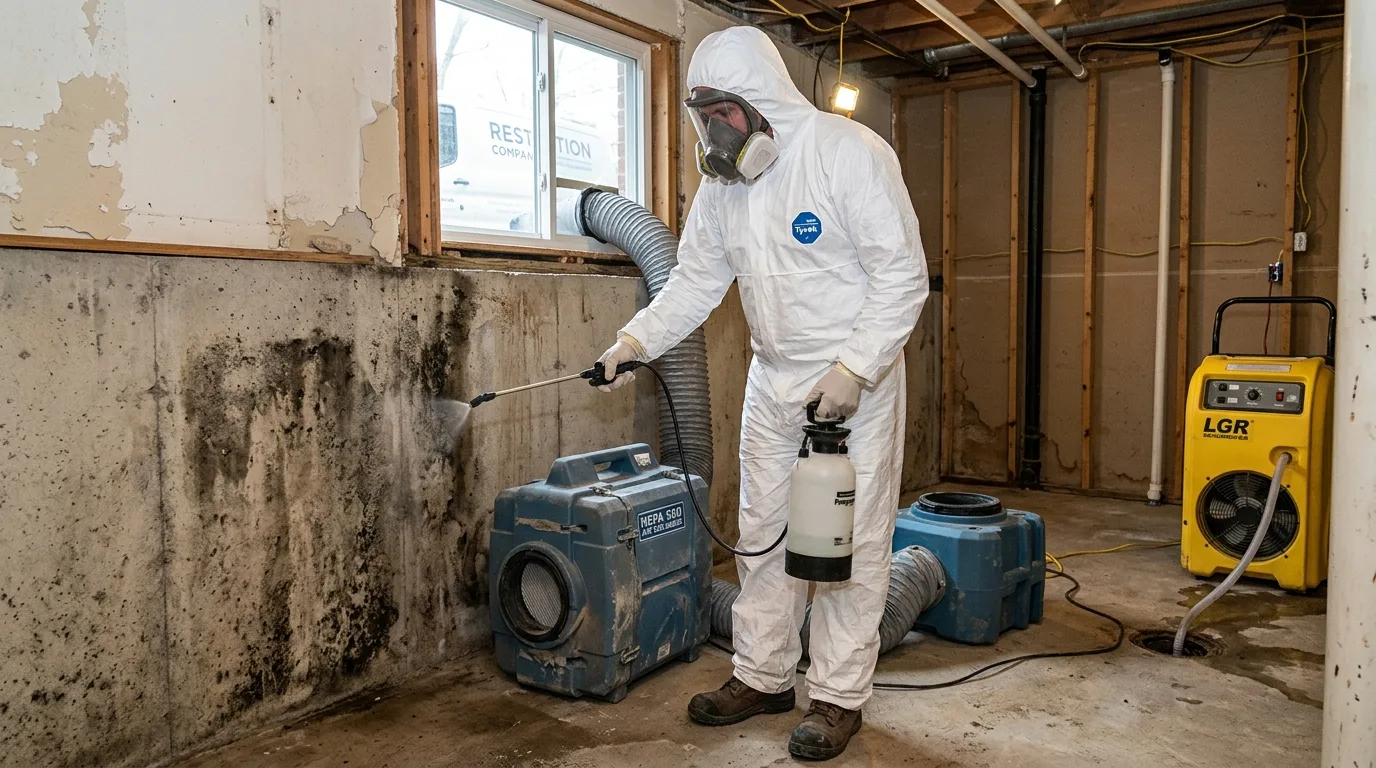
Preventing mold after water damage in your Watauga home is a 48-to-72-hour race. In the hot summer months — when Watauga’s temperatures regularly exceed 90°F — mold colonies can establish in saturated drywall and subfloor materials within two days of a water event. Understanding what drives mold growth, what homeowners can do immediately, and where professional structural drying is genuinely necessary helps Watauga residents make smart decisions in the critical window after any water damage event.
Water Damage in Watauga? Stop Mold Before It Starts. Call (877) 698-1311
IICRC certified, 24/7 emergency response, structural drying that actually works.
Why Mold Risk Is Elevated in Watauga
Two factors make mold prevention after water damage particularly urgent in Watauga compared to cooler or drier climates. First, summer temperatures from June through September regularly hit 90–100°F, and indoor temperatures in an un-air-conditioned or power-outaged home during these months can exceed 85°F — well within the ideal temperature range for rapid mold colony growth (77–90°F is the sweet spot for most residential mold species).
Second, many of Watauga’s 1960s–70s homes use drywall formulations that are more porous and more mold-susceptible than modern paperless or fiberglass-faced drywall products. Original paper-faced drywall in Central Watauga’s older homes absorbs water faster and provides a richer organic substrate for mold growth than newer materials. This means the window between water event and mold establishment is shorter in older Watauga homes than in newer construction.
What Homeowners Can Do in the First 24 Hours
Extract standing water immediately. Remove as much water as possible using whatever tools are available — mops, towels, consumer wet vacs. The goal is not professional-grade extraction but rather removing the bulk of free-standing water from hard surfaces. This buys time before professional extraction arrives.
Start air movement. Fans circulating air over wet surfaces accelerate evaporation from hard flooring and surfaces. Important caveat: fans are appropriate for clean-water events only. For gray water (appliance overflow, toilet overflow) or Category 3 sewage events, do not run fans before professional assessment — air movement in contaminated environments spreads pathogens.
Open windows if outdoor conditions permit. If outdoor relative humidity is below approximately 65% (typical in Watauga from fall through early spring, and on dry summer days), opening windows provides ventilation that helps surface drying. During Watauga’s humid summer weeks — when outdoor humidity exceeds 80% — opening windows brings humid air in, which worsens conditions. Check the outdoor humidity before opening windows.
Elevate furniture off wet floors. Furniture legs absorb water from wet flooring, and upholstered furniture retains moisture that drives mold growth. Move furniture off wet surfaces immediately — even placing small blocks or aluminum foil under furniture legs provides meaningful protection.
Remove wet rugs and textiles. Carpet, rugs, and upholstered items are high-risk mold substrates — they cannot be effectively dried in place when saturated. Remove them from the wet area and dry them outside or in a dry interior space. Saturated carpet that remains on wet subfloor is mold-growing substrate on top of mold-growing substrate.
What Homeowners Cannot Do: The Limits of DIY Drying
There is a hard limit to what homeowner-level drying can accomplish, and understanding it prevents the most common mistake: declaring success when the visible surface is dry while hidden moisture remains. This is the pattern behind most mold calls we receive in Watauga — a homeowner who dried the floor and moved back furniture, only to find mold in the wall cavity or under the new flooring 6 weeks later.
Wall cavities: Water that penetrates drywall migrates into the wall cavity through the paper backing. Consumer fans drying the surface create no meaningful air movement in the cavity behind the drywall. Professional drying uses wall cavity drying panels and injectidry equipment that circulates forced air inside wall assemblies — the only effective approach for cavity moisture.
Subfloor assemblies: In slab-foundation homes (the majority of Watauga’s housing stock), water that penetrates flooring is trapped between the concrete slab and the flooring above. Consumer fans circulating over the surface accomplish nothing for moisture in this assembly. Professional floor mat extraction and directed heat equipment address this specific configuration.
Below-slab migration: In slab leak events, water continues to seep upward from the wet clay beneath the slab for days after the plumbing is repaired. This ongoing moisture source defeats surface drying approaches entirely — only commercial dehumidification maintained to target levels over multiple days prevents this moisture from driving mold growth in flooring and wall bases.
Professional Structural Drying in Watauga — Mold Prevention That Works
(877) 698-1311 — IICRC certified, commercial dehumidification, moisture documentation.
When to Call a Professional for Structural Drying
The threshold for professional structural drying is lower than most homeowners expect. If any of the following apply to your water damage event, professional structural drying is not optional:
- Water has been present for more than 4 hours before extraction began
- Water penetrated drywall (visible staining, soft drywall surface)
- Water is present in carpet on a slab foundation
- The event occurred during summer months (June–September) when mold risk is highest
- The source was Category 2 or Category 3 (gray or black water)
- The affected area includes any interior wall cavity
For events that are truly small and contained — a slow appliance drip on a tile floor caught within 1 hour — thorough DIY drying with fans and dehumidifiers may be sufficient. Everything beyond that merits professional assessment.
After Professional Drying: Maintaining Mold Prevention
Professional structural drying creates a window during which mold cannot establish — but maintaining conditions after drying matters for long-term prevention. In Watauga’s climate:
Maintain indoor humidity below 60% during June–September. A properly functioning HVAC system typically maintains humidity in this range automatically. If your HVAC has been off during a power outage or repair period, monitor humidity with a hygrometer before restoring occupancy.
Verify the moisture source is fully corrected. The most common cause of post-remediation mold return in Watauga is an uncorrected underlying moisture source — a slab leak that was repaired but whose effects are still dissipating, an HVAC condensate line that is still draining improperly, or a roof infiltration point that was temporarily patched but not properly sealed.
Schedule a follow-up moisture reading 2–3 weeks after restoration. A final professional moisture check ensures that any residual moisture has fully dissipated before the space is considered fully restored.
Frequently Asked Questions
Is bleach effective for mold prevention after water damage?
Bleach kills mold on non-porous surfaces like tile and glass, but it is ineffective on porous materials like drywall and wood because it cannot penetrate to the depth of colonization. For mold on porous surfaces, appropriate EPA-registered antimicrobial products must be used at proper concentrations and dwell times. For mold prevention rather than treatment, the most effective approach is simply eliminating the moisture source and achieving complete structural drying before mold establishes.
How long does professional structural drying take in Watauga?
Most residential structural drying projects in Watauga require 3–5 continuous days of commercial dehumidification and air movement to achieve IICRC-standard moisture levels. Daily moisture readings confirm progress. The timeline varies based on the volume of water, the materials affected, and ambient conditions during the drying period.
If I see mold 6 weeks after a water event that seemed resolved, what happened?
This is almost always a hidden moisture situation — moisture that remained in wall cavities, subfloor assemblies, or below-slab conditions after apparent surface drying. The visible mold growth is the belated symptom of incomplete drying. At this stage, professional mold remediation is required along with a re-assessment of the original moisture source to ensure it has been fully corrected.
Prevent Mold After Water Damage in Watauga
(877) 698-1311 — Professional structural drying, IICRC certified, 24/7 response.
Related: