Watauga's Older Homes & Water Damage Risk in 2025
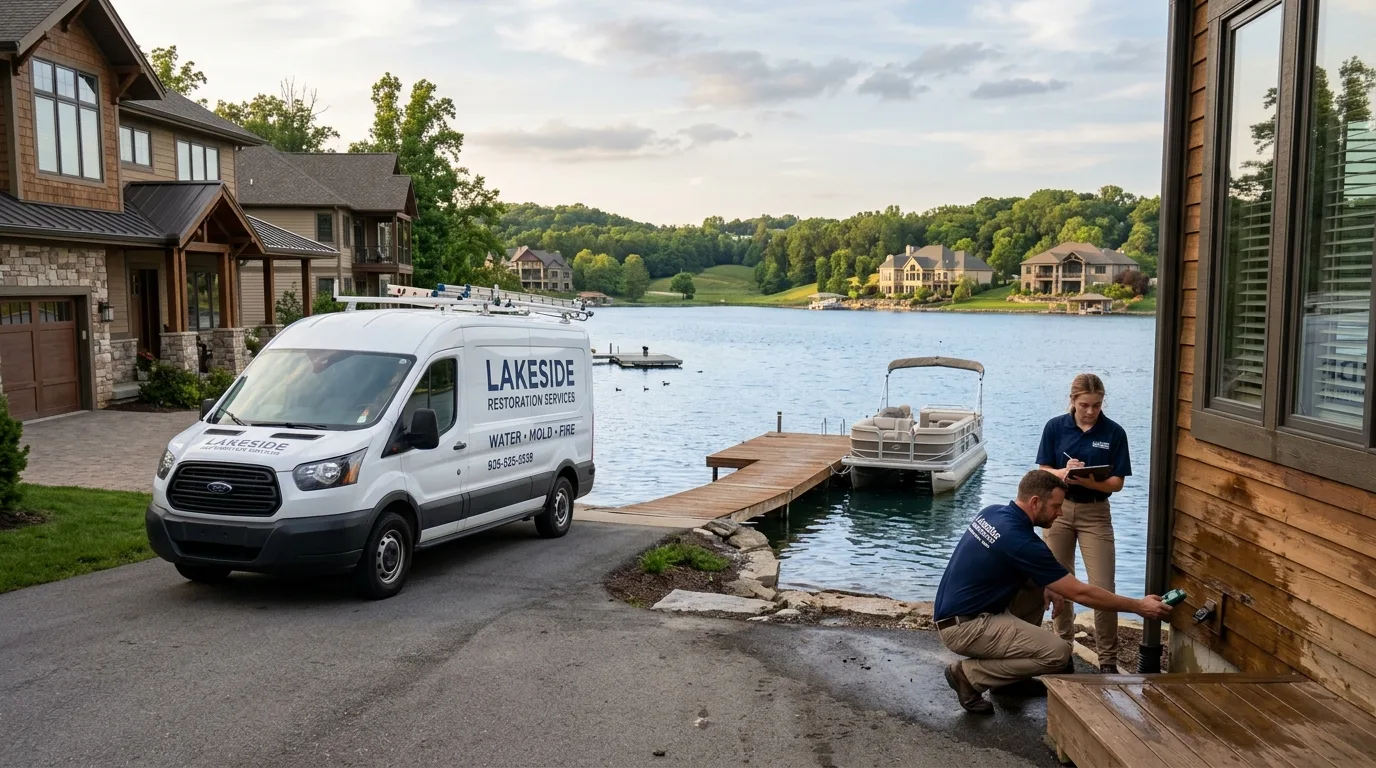
If your Watauga home was built in the 1960s or 1970s, the infrastructure beneath your floors may be quietly working against you. Water damage Watauga homes of that era face is not random bad luck — it is a predictable consequence of aging materials, soil movement, and climate patterns that affect this specific zip code in ways that newer construction simply does not. In this post, we cover why older homes in this area are at elevated risk, which specific systems fail most often, and what homeowners can do about it.
Water Damage in Your Watauga Home? Call (877) 698-1311
24/7 emergency response. IICRC certified. We know Watauga's older homes.
Why Watauga’s Older Homes Face Higher Water Damage Risk
Central Watauga developed rapidly in the 1960s and 1970s, producing a dense cluster of slab-on-grade homes with original galvanized steel or early copper plumbing that is now 50–60 years old. At the time of construction, these materials were considered durable. What the engineers of the era did not fully account for was the behavior of Tarrant County’s highly expansive Vertisol clay soil beneath those slabs.
Galvanized steel pipe corrodes from the inside out as zinc coating deteriorates over decades. By the time a pipe shows visible rust at a fitting, the interior walls may have already narrowed to a fraction of their original diameter. When a failure finally occurs — typically at a joint or bend point — it can release hundreds of gallons before the homeowner notices. Early copper pipe, while more corrosion-resistant, suffers from joint failures caused by the repeated expansion and contraction driven by Tarrant County’s clay soil movement.
How Tarrant County’s Clay Soil Accelerates the Problem
Tarrant County sits on some of the most expansive Vertisol clay soils in the country. During Watauga’s dry summers, this soil shrinks dramatically — sometimes pulling away from foundation edges by inches, creating voids beneath slabs. When spring rains arrive, the clay expands back, pushing upward with measurable force against slab foundations. This cycle repeats every year.
The cumulative effect on plumbing is significant. Pipes embedded in concrete that move repeatedly at their support points develop micro-fractures at joints and bends. In homes built before the era of PEX flexible piping, this means rigid pipe runs that were never designed for continuous soil movement. Homes throughout the Whispering Hills area and Holiday Lane neighborhoods show a consistent pattern of slab leak failures in the 40–60 year age range — and that window is now.
Practical uses — what this means for your home:
- Water bill monitoring: A 20–30% unexplained increase in your monthly water bill is the most reliable early indicator of a slab leak. Compare your current bill to the same month last year and contact a professional if the increase is unexplained.
- Floor temperature checks: A warm spot on tile or hardwood in an otherwise cool room often indicates a hot water line leaking beneath the slab. Walk barefoot across your floors and note any zones that feel noticeably warmer.
- Musty odor investigation: A persistent musty smell without visible water suggests moisture accumulating in a subfloor or wall cavity. This often precedes visible mold remediation needs by weeks.
- Foundation crack monitoring: Photograph and date any new floor, wall, or baseboard cracks. New cracking patterns in a home that had been stable for years can indicate changing soil moisture beneath the slab.
How Watauga’s Climate Compounds the Aging Plumbing Risk
By late summer in Watauga, the soil beneath slab foundations has typically undergone months of drought-driven contraction. When the first heavy fall rain arrives — or when temperatures drop suddenly in December — the rapid change in soil moisture and thermal conditions stresses whatever plumbing joints are already at their fatigue limit. This is why the highest volume of slab leak calls in Watauga occurs in fall and after winter freeze events, not in the middle of summer.
The February 2021 Winter Storm Uri illustrated this risk at scale: when temperatures plunged to single digits across North Texas, pipes that were already compromised by soil stress — especially in the uninsulated slab runs of 1960s–70s construction — froze and burst catastrophically. Homes in Central Watauga’s older neighborhoods experienced failure rates significantly higher than newer construction in Keller or Southlake, where better-insulated PEX plumbing had been installed. The burst pipe repair calls from that event lasted months.
Schedule a Water Damage Assessment in Watauga
Our team specializes in older Watauga homes. Call (877) 698-1311 for a thorough evaluation.
What You Can Do Right Now
Awareness is the most valuable tool for owners of older Watauga homes. Water damage that is caught early — when a slab leak has been running for days rather than weeks — costs a fraction of the restoration bill for a leak discovered only when flooring begins buckling. Three practical steps:
First, set a monthly water bill comparison reminder. Any unexplained increase warrants investigation before it becomes a restoration project. Second, walk your floors barefoot after extended periods with no one home — hot water line leaks are easiest to detect when the house has been quiet. Third, schedule a professional moisture assessment before listing your home for sale or after any major drought-to-rain weather transition; catching a developing slab leak before it becomes a visible problem protects both your investment and your health.
For homes built in this era, slab leak detection and repair in Watauga is not an emergency-only service — it is responsible preventive maintenance. See also our complete guide to water damage restoration in Watauga and our post on how Tarrant County’s expansive clay soil affects your plumbing for the full geological picture.
Frequently Asked Questions
Are all older Watauga homes at risk, or only certain areas?
The highest risk concentration is in Central Watauga and the Whispering Hills and Holiday Lane areas, where original 1960s–70s construction is most prevalent. Homes near the Keller border that were built after 1990 using PEX or CPVC piping face significantly lower risk from pipe-failure water damage — though they are not immune to other water damage sources like roof damage and appliance failures. Age of the home and pipe material are the two key variables.
Can I detect a slab leak myself before calling a professional?
You can detect the indirect signs — unusual water bills, warm floor spots, unexplained odors, and the sound of running water when all fixtures are off. Confirming the leak location and extent requires acoustic detection equipment and moisture mapping technology that homeowners do not have access to. Professional detection is also necessary to document the leak for insurance claim assistance.
Does homeowners insurance cover slab leak damage in Watauga?
Most standard Texas homeowners insurance policies cover the resulting water damage — structural drying, flooring replacement, and affected wall repairs — when a slab leak results from a sudden, accidental plumbing failure. The plumbing repair itself (the pipe work) is typically not covered. Policies vary, so review your specific coverage and consult your carrier before assuming coverage either way.
Older Watauga Home? Get a Free Water Damage Assessment.
(877) 698-1311 — 24/7 response, IICRC certified, direct insurance billing. We know these homes.
Related posts: