Sewage Backup Cleanup in Watauga: Health Risks and Professional Solutions
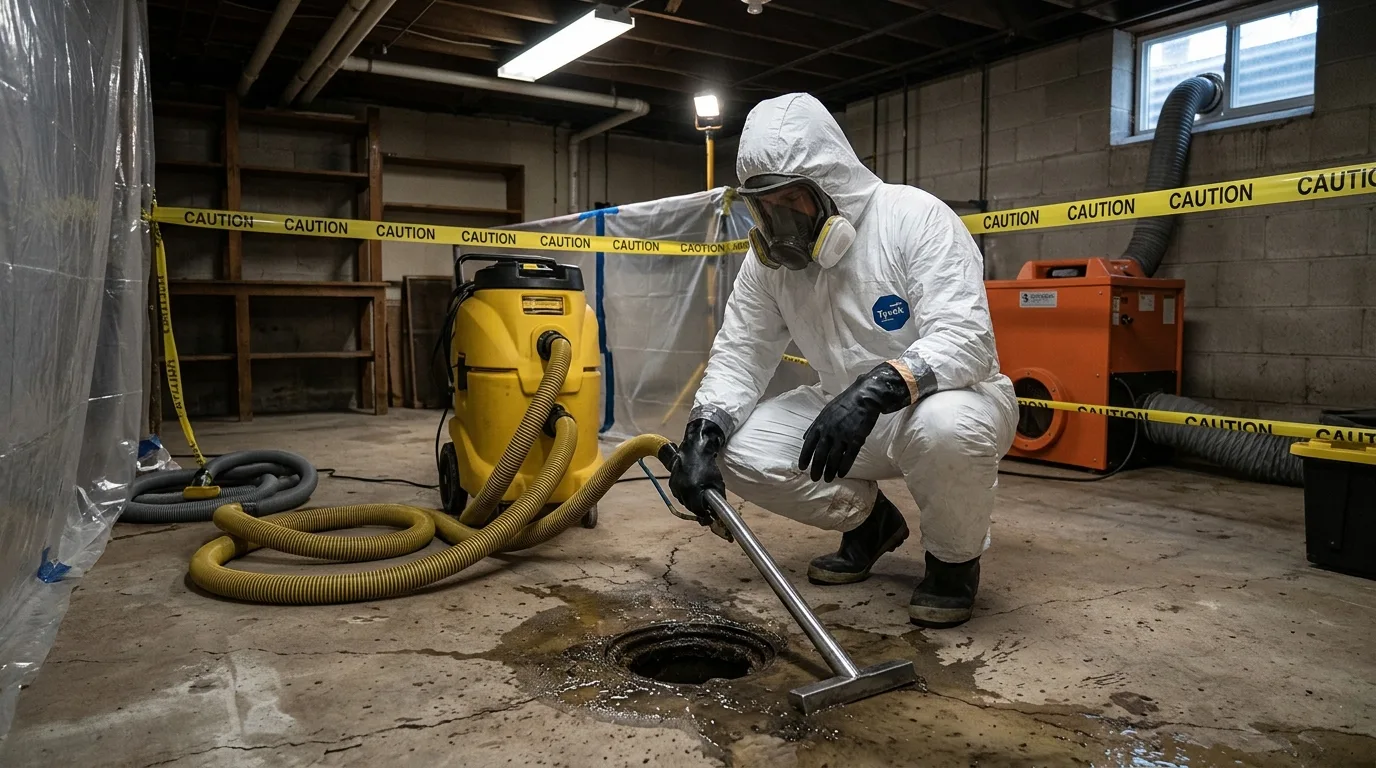
A sewage backup is among the most alarming water damage events a Watauga homeowner can face — and also among the most dangerous to address without professional help. Sewage cleanup Watauga residents need after a backup is a Category 3 biohazard situation involving fecal bacteria, viruses, and parasites that can cause serious illness. This post covers the health risks, the professional cleanup process, what causes sewage backups in this area, and what homeowners should and should not do while waiting for professional help.
Sewage Backup in Watauga? Call (877) 698-1311 Immediately
24/7 Category 3 biohazard response. Safe containment, extraction, and disinfection.
Why Sewage Backup Is a Health Emergency
Raw sewage contains Category 3 pathogens — bacteria including E. coli and Salmonella, hepatitis A virus, norovirus, Cryptosporidium, and Giardia, among others. Unlike clean water or even gray water, Category 3 sewage contamination cannot be safely managed by homeowners without professional-grade personal protective equipment and disinfection chemistry. Even brief skin contact with sewage-contaminated water can cause illness, and aerosol exposure during cleanup can cause respiratory infections.
Do not attempt to clean sewage backup yourself. Evacuate affected areas, keep children and pets out, and call a licensed remediation professional immediately. This is not a situation where protective gloves and bleach are adequate.
What Causes Sewage Backups in Watauga Homes
Understanding the cause of a sewage backup matters because it determines whether the situation will recur. The most common causes in Watauga:
Tree root intrusion: The most frequent cause in Central Watauga and the Whispering Hills area, where mature trees have grown near the sewer lateral lines installed in the 1960s and 1970s. Roots enter pipe joints and grow along the interior of the pipe, eventually causing partial or complete obstruction. Water extraction alone does not resolve this — the root intrusion must be cleared or the pipe section replaced.
Main line blockage: Foreign materials — wipes (even “flushable” ones), grease accumulation, or debris — can cause blockages in the main line or at municipal connections. This type of backup often affects multiple fixtures simultaneously throughout the house.
Municipal sewer overload: During Watauga’s intense spring storm events, the municipal sanitary sewer system can be overloaded by storm drainage cross-connection, causing sewage to back up through floor drains and the lowest fixtures in the home. This is an infrastructure-level problem that homeowners cannot prevent, but a sewer backup valve installed on the home’s sewer lateral can mitigate the risk.
Sewer lateral collapse: In Watauga’s older neighborhoods, aging clay or cast iron sewer laterals can develop structural failures — cracks, collapsed sections, or root-damaged joints — that block flow. Camera inspection of the lateral is the diagnostic tool for this cause.
The Professional Sewage Cleanup Process
Professional sewage cleanup follows strict Category 3 biohazard protocols:
Containment and PPE setup: Full personal protective equipment — respirators, Tyvek suits, waterproof gloves and boots — is required for all technicians. Containment barriers prevent cross-contamination of unaffected areas.
Sewage extraction: Specialized extraction equipment designed for Category 3 material removes sewage and contaminated water in sealed systems. All material is contained and disposed of according to biohazard waste requirements. Standard water extraction equipment used for clean water events is not appropriate for sewage.
Material removal: Porous materials contaminated by sewage — carpet, drywall to the flood line, insulation — must be removed and discarded. Unlike clean water events where drying can sometimes preserve flooring, sewage contamination in porous materials cannot be reliably decontaminated by treatment applied to the surface.
Disinfection: All structural surfaces are treated with EPA-registered hospital-grade disinfectants proven effective against the specific pathogen categories present in sewage. This is not household bleach dilution — it is industrial antimicrobial chemistry applied to specified dwell times and concentrations.
Structural drying: Following disinfection, dehumidification equipment dries the affected structural assembly to prevent secondary mold growth from the moisture component of the event.
Post-remediation testing: Surface testing confirms that disinfection achieved the required level of pathogen reduction before the area is cleared for re-occupancy and rebuild.
Sewage Backup Cleared — Now What? Call for Cleanup
(877) 698-1311 — Safe Category 3 biohazard cleanup throughout Watauga and Tarrant County.
What Homeowners Should Do Before Help Arrives
Evacuate the affected area — keep all household members, including pets, out of the contaminated space. Do not attempt to mop up sewage — this spreads contamination and creates aerosol exposure risk. Shut off the main water supply if the backup is from a plumbing failure rather than storm-related. Turn off HVAC if it is circulating air through the affected area — contaminated air circulating through ductwork spreads spores and odors throughout the house.
Do keep the area as undisturbed as possible from the time of discovery until professionals arrive. Every contact with contaminated surfaces increases cross-contamination risk and complicates the professional assessment.
Sewage Backup Insurance Coverage in Watauga
Standard Texas homeowners insurance typically excludes sewer backup damage. Coverage is available through a sewer backup endorsement added to the standard policy — at typical annual premiums of $50–$150, this endorsement is among the best value additions available to Watauga homeowners in older neighborhoods with aging sewer infrastructure.
If the sewage backup was caused by a sudden plumbing failure — a collapsed pipe section or a burst connection — some water damage provisions in standard policies may apply depending on carrier and policy language. We provide thorough documentation of the cause and event to support whatever coverage claim may apply. See our insurance guide on does homeowners insurance cover water damage in Texas for the full framework.
Preventing Future Sewage Backups
Annual camera inspection of your sewer lateral — particularly for homes in Central Watauga’s older neighborhoods — is the most cost-effective preventive measure available. Root intrusion identified early, before it causes a backup event, can be cleared by hydro-jetting at a fraction of the cost of full sewage cleanup and pipe replacement. A $200–$400 camera inspection and line clearing is far better value than a $5,000–$10,000 sewage backup remediation project.
Installing a backflow prevention valve on the home’s sewer lateral eliminates the risk of municipal sewer overload backups during heavy spring storms — a common cause of sewage backups in lower-lying areas near Watauga’s storm drainage infrastructure.
Frequently Asked Questions
Can I return to my home during sewage cleanup?
Not to the affected areas. If the contamination is contained to a single room or basement space that can be isolated from the rest of the house, other areas may be occupiable. If contamination has spread to central living areas or the HVAC has distributed odors throughout the house, temporary relocation until cleanup and clearance testing are complete is advisable.
How long does professional sewage cleanup take in Watauga?
Emergency extraction and initial disinfection typically take 4–8 hours. Complete remediation including structural drying runs 3–7 days. Material removal and rebuild, if required, adds 1–2 weeks. The full project timeline depends on the extent of contamination and material removal required.
Is sewage from a municipal backup treated differently than sewage from my own plumbing?
The category and cleanup protocol are the same — both are Category 3 biohazards. The difference is in the cause determination for insurance purposes and in who bears responsibility for the source. Municipal sewer backups may involve additional claims against the water utility depending on the circumstances.
Sewage Backup Cleanup in Watauga — We Handle It Safely
(877) 698-1311 — Category 3 protocols, IICRC certified, 24/7 response throughout Tarrant County.
Related: