Winter Storm Uri Lessons: Freeze Protection for Watauga Homes
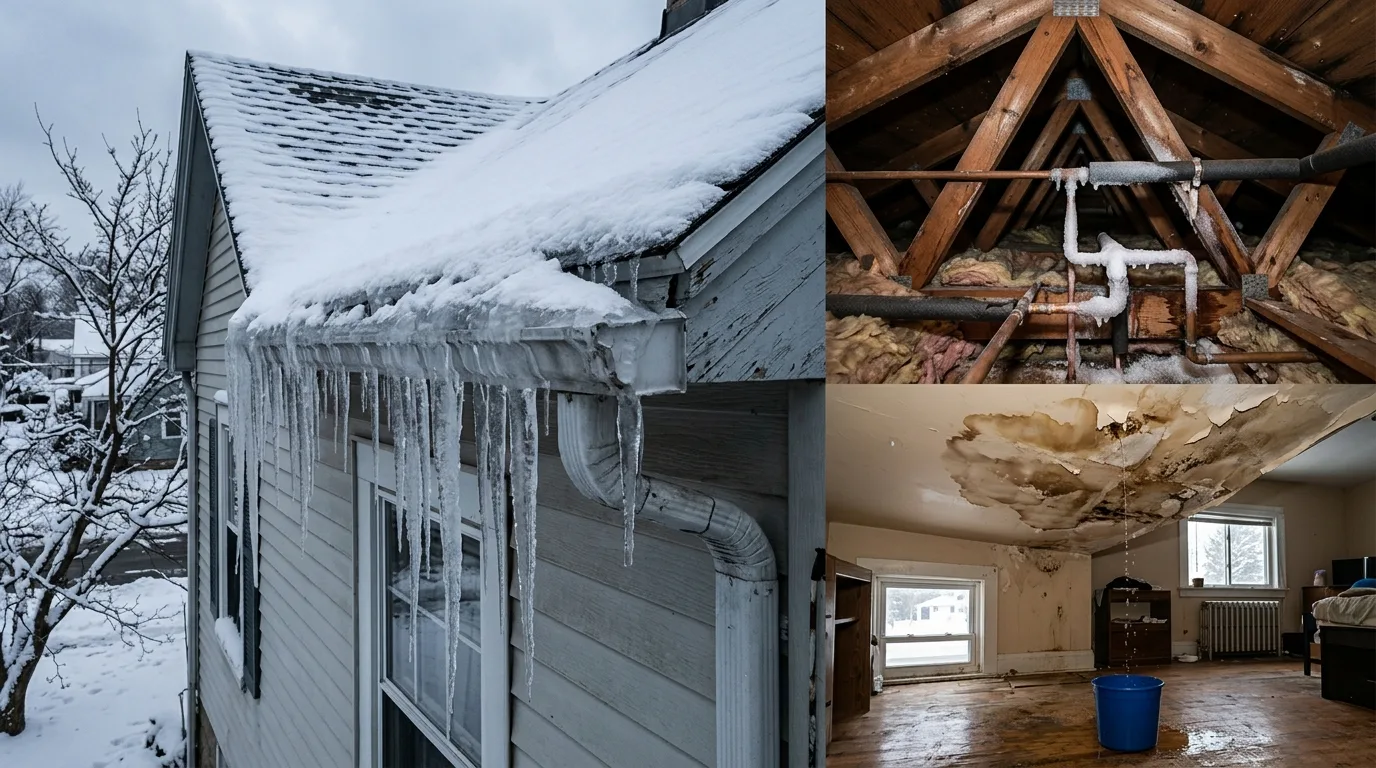
In February 2021, Winter Storm Uri brought temperatures to single digits across North Texas — a region where homes had never been designed for arctic conditions. The result was catastrophic: millions of pipes burst, the power grid failed for days, and Watauga homeowners discovered that their 1960s–70s houses were particularly vulnerable to cold that their attic pipe runs, exterior-wall supply lines, and slab plumbing had never been designed to survive. Winter freeze Watauga homeowners experienced that week generated water damage claims that overwhelmed every restoration contractor in Tarrant County for months.
This post is not an abstract warning about climate change — it is a practical guide based on what actually failed in Watauga during Uri and what homeowners can do before the next severe freeze to protect their property.
Freeze Damage in Watauga? Call (877) 698-1311 Immediately
24/7 emergency response for burst pipes and freeze-related water damage throughout Tarrant County.
What Went Wrong During Winter Storm Uri in Watauga
The failure pattern was predictable in retrospect. Homes with pipe runs in uninsulated attic spaces — common in 1960s–70s construction where attic access was designed for ventilation, not pipe protection — froze within the first 12 hours of sustained sub-freezing temperatures. When the power went out and heating systems failed, interior temperatures dropped faster than expected, and pipes in exterior walls — even insulated ones — began freezing.
Watauga’s housing stock was particularly exposed because many Central Watauga homes have attic supply line runs that serve bathroom fixtures on the second floor, and these runs sit directly above unheated attic spaces with minimal insulation between them and the outdoor air. When temperatures hit 7°F overnight, these pipes had no thermal protection whatsoever.
The second major failure point was slab plumbing. Watauga’s expansive clay soil, already stressed from the drought conditions of the preceding summer, had contracted significantly before the freeze. When soil temperatures dropped, slab joints that were already at their fatigue limit from soil movement failed under the combined stress of frozen water expanding inside the pipe. Many homeowners did not discover these slab failures until the soil thawed and water began surfacing through flooring — sometimes weeks after the freeze event.
Freeze Protection: A Watauga-Specific Checklist
The lessons from Uri apply directly to preparation for the next severe event. Unlike Houston or Austin, Watauga’s northern DFW location means there will be more severe freeze events in future years — the question is when, not whether.
Before cold weather arrives:
- Insulate attic pipe runs. Any water supply pipe in your attic should have foam pipe insulation at minimum, and heat tape for pipes within 6 inches of uninsulated attic access panels. This single step would have prevented the majority of attic-pipe failures during Uri.
- Know your main water shutoff location. During Uri, many homeowners could not find their shutoffs in the dark and cold, dramatically worsening their losses. Find it now and make sure every adult in the household knows exactly where it is.
- Install freeze sensors on the most vulnerable pipes. Smart leak and freeze detectors that send smartphone alerts cost $25–$50 per zone and can trigger shutoff or notification before a pipe bursts.
- Maintain minimum household temperature when traveling. Never set the thermostat below 55°F when leaving for an extended period during winter months. The energy cost of maintaining 55°F is trivial compared to the water damage repair cost of a pipe burst in an unoccupied home.
During a forecast severe freeze event:
- Let faucets on exterior walls drip overnight — running water requires a lower temperature to freeze than static water.
- Open cabinet doors under sinks on exterior walls to allow household heating to reach pipe runs.
- If temperatures are forecast below 15°F for more than 12 consecutive hours, consider shutting off the main water supply and draining the lines if you will be away from the home.
Preparing for Winter in Watauga? Call (877) 698-1311
We provide 24/7 emergency response for freeze-related pipe bursts and water damage.
What to Do If Your Pipes Freeze Before They Burst
If you discover frozen pipes — typically identified by no water flow from a specific fixture during a freeze event — the priority is preventing the freeze from becoming a burst. Do not use an open flame or heat gun on pipes — thermal shock can crack pipe walls. A hair dryer on low, applied to the pipe while a faucet is open, allows frozen water to expand safely as it thaws. A space heater in the affected area (with safe distance from any combustibles) raises ambient temperature more slowly but more evenly.
The most important action: keep a faucet open while thawing so that expanding water has somewhere to go. A completely sealed frozen pipe will burst because water expands approximately 9% when it freezes — if it cannot expand through an open faucet, it expands through the pipe wall.
Once the freeze has passed and you restore water service, inspect all visible pipe sections and check for water staining, dampness, or the sound of running water in walls. Many burst pipe situations from Uri were not discovered immediately because the broken pipe was in a wall or slab location where water accumulated before surfacing.
How Water Damage from Freeze Events Differs from Other Types
Freeze-event water damage has three characteristics that distinguish it from typical burst pipe repairs or storm damage:
Volume: A failed pipe run can release thousands of gallons before being stopped, especially if the homeowner is away or the failure occurred overnight. The volume of water in the structure when professionals arrive is often far greater than in typical appliance failures or roof leaks.
Category uncertainty: If water has been sitting in a warm home for more than 24–48 hours, what began as Category 1 clean water (from a pipe) has likely progressed toward Category 2 (gray water with biological growth potential). Professional assessment of water category affects the drying and remediation protocol.
Concurrent structure failures: Uri caused pipe failures in multiple locations simultaneously for many Watauga homeowners — one burst pipe was visible, others in walls and slabs were not. A thorough moisture assessment maps the full extent of damage rather than addressing only the visible failure point. See our guide on 5 signs of hidden water damage in your Watauga home for the indicators that multiple failure points may be present.
The Insurance Side of Freeze Damage
Standard Texas homeowners insurance covers sudden and accidental water damage from freeze-related pipe bursts. Coverage is generally denied in two situations: homes left unoccupied with heat off during the freeze, and situations where the carrier argues the homeowner had reasonable opportunity to prevent the damage and did not act. Proper freeze preparation — insulation, dripping faucets, maintaining heat — establishes your reasonable preventive action.
Document everything from the moment of discovery. Photographs, video, and a written timeline of when you discovered the damage and what actions you took are the foundation of a successful claim. See our detailed guide on does homeowners insurance cover water damage in Texas for the full coverage picture.
Frequently Asked Questions
Will Uri-style events happen again in Watauga?
Climatologically, severe polar vortex events affecting North Texas will continue to occur. The specific severity of Uri — multiple consecutive days below 0°F — may not repeat on the same frequency, but single-night freeze events bringing temperatures below 15°F occur several times per decade in Watauga. Preparing your home for single-night extreme freezes is practical, cost-effective protection against the most common freeze damage scenario.
My pipes survived Uri — do I still need to prepare them?
Surviving Uri does not mean pipes are problem-free. The stress cycles from that event and subsequent freeze events accelerate fatigue in older galvanized and copper plumbing. A pipe that held during Uri may be one freeze event away from failure. If your home has original 1960s–70s plumbing, a professional assessment of pipe condition is a reasonable investment.
How much did the average freeze-damage restoration cost after Uri in Tarrant County?
Reports from Tarrant County restoration companies after Uri indicated average residential project costs of $15,000–$40,000 for homes with multiple pipe failures and extended soaking periods. Homes where pipes were discovered and water was shut off within hours averaged $3,000–$8,000. The difference is entirely in the response time — which reinforces the value of knowing your shutoff location and acting immediately upon discovering a failure.
Freeze Damage or Burst Pipe in Watauga? Call Now.
(877) 698-1311 — 24/7 emergency response, IICRC certified, direct insurance billing.
Related: